

Schengen visa requirements for UAE residents
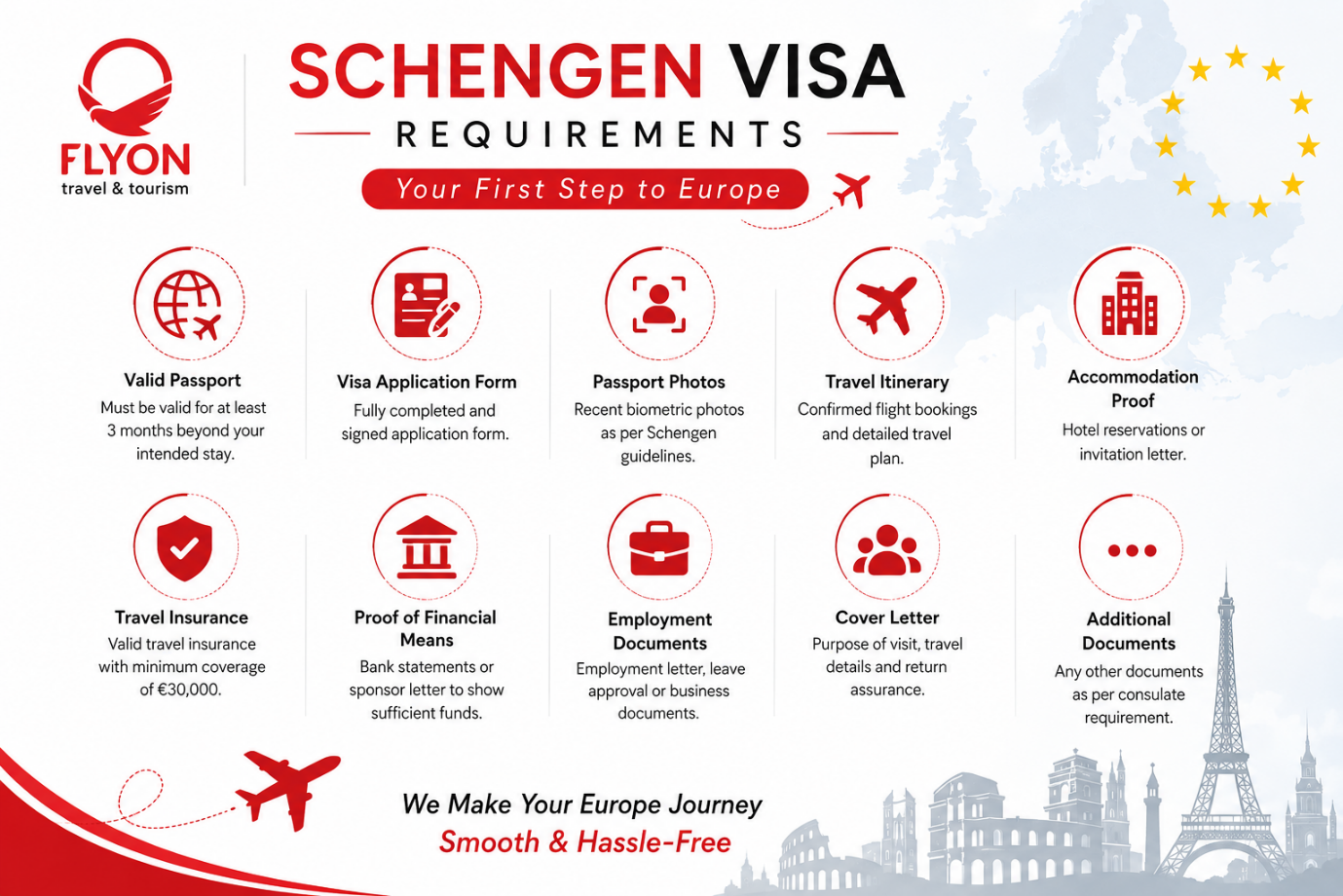
When travellers look at a Schengen visa for UAE residents, they usually want one thing clear information before them book flights or hotels. The main idea is simple. Some UAE residents can enter the Schengen Area only after getting the right visa, while UAE passport holders may have different entry rules depending on nationality. At FlyOn Travel & Tourism, the aim is to keep the process clear, calm, and practical from the start.
Which Countries Are Included in the Schengen Area?
The Schengen Area currently includes 29 European countries that share open internal borders. Once you enter any one of these countries on a valid Schengen visa, you can move freely between all of them without going through separate passport checks at each border.
For UAE residents planning a European trip, this is one of the biggest advantages of a Schengen visa one permit, multiple destinations.
Here is the full list of Schengen member states as of 2026:
Austria, Belgium, Bulgaria, Croatia, Czech Republic, Denmark, Estonia, Finland, France, Germany, Greece, Hungary, Iceland, Italy, Latvia, Liechtenstein, Lithuania, Luxembourg, Malta, Netherlands, Norway, Poland, Portugal, Romania, Slovakia, Slovenia, Spain, Sweden, and Switzerland.
It is worth noting that not every European country is part of the Schengen Area. The United Kingdom, Ireland, and several Balkan nations operate their own visa systems. So if your travel plan includes both Schengen and non-Schengen countries, you may need separate visas for those destinations.
Why the Schengen Visa for UAE Residents Matters
A Schengen visa lets you visit several European countries with one permit, which is useful for tourism, family visits, short business trips, and brief study plans. For many residents in the UAE, the first step is checking eligibility before gathering papers. This is where a SCHENGEN VISA FOR UAE RESIDENTS becomes an important search because the rules depend on nationality, residency status, and travel purpose.
If your paperwork is complete, your trip plan is clear, and your financial records look stable, your case usually feels more organised to the embassy. That is why careful preparation matters more than rushing.
Who Can Apply for a Schengen Visa from the UAE?
Before gathering documents or booking an appointment, the first question to answer is whether you actually qualify to apply. The eligibility rules are straightforward but vary depending on your nationality and current legal status in the UAE.
You are eligible to apply if you:
- Hold a valid UAE residence visa (not a short-term visit visa)
- Have a passport valid for at least six months beyond your planned travel dates
- Have a clear and specific reason for travel tourism, family visit, business, or short-term study
- Can show proof of sufficient funds to cover your stay in Europe
- Have confirmed accommodation and travel plans in place
- Hold valid Schengen travel insurance with a minimum coverage of €30,000
- Have no active travel bans or unresolved immigration issues
- Can show strong ties to the UAE such as employment, property, or family
This applies to all nationalities residing in the UAE including Indian, Pakistani, Filipino, Egyptian, and other passport holders who need a Schengen visa to enter Europe.
You are not eligible to apply if you:
- Are in the UAE on a short-term visit or tourist visa
- Your UAE residence visa expires within six months
- You cannot provide complete financial documentation
- You have a history of Schengen visa overstays or previous rejections without a significantly stronger application
- You are unable to submit biometrics or attend the visa centre appointment in person
- Your travel purpose is unclear or not supported by your submitted documents
UAE passport holders are generally exempt from the Schengen visa requirement. However, they may still need to register under the ETIAS (European Travel Information and Authorisation System) once it becomes mandatory. It is always a good idea to check the latest entry requirements before booking your trip.
Documents You Should Keep Ready
Most applications ask for a similar set of papers, though small details may change by country.
Core Papers for the Application
- Valid passport with enough remaining validity
- UAE residence visa
- Emirates ID copy
- Recent passport-size photos
- Bank statements for the last six months
- Confirmed flight booking
- Hotel booking or host letter
- Travel insurance with Schengen coverage
- Employment letter or business proof, when needed
For a Schengen visa for UAE residents, it also helps to show that you have a steady income, a fixed home base, and a reason to return after the trip.
Types of Schengen Visas Available for UAE Residents
Not all Schengen visas are the same. Before you begin your application, it helps to know which type suits your purpose as each one has different requirements, validity periods, and processing timelines.
Type C – Short-Stay Visa (Most Common)
This is the standard Schengen visa for UAE residents travelling to Europe for tourism, business meetings, family visits, or short-term training programmes. It allows you to stay in the Schengen Area for up to 90 days within any 180-day period. Depending on your travel history and the embassy's discretion, it may be issued as single-entry, double-entry, or multiple-entry.
Type A – Airport Transit Visa
If your travel involves a layover at a Schengen country airport without actually entering the country, you may need an airport transit visa. This is typically required for certain nationalities and does not allow you to leave the airport's international transit zone.
Type D – Long-Stay National Visa
This visa is issued directly by the individual Schengen country and is used for stays longer than 90 days. It is applicable for people relocating for work, full-time study, or joining a family member who is already a resident of a Schengen country. Unlike Type C, a Type D visa is country-specific and does not automatically grant you the right to travel freely within all Schengen nations.
Which Type Do UAE Residents Usually Apply For?
The large majority of UAE residents applying from Dubai or Abu Dhabi are applying for a Type C short-stay visa for tourism or family visits. This is the standard category processed through the embassy or VFS Global centres operating in the UAE.
Here is a quick reference to make this clearer:
| Visa Type | Purpose | Maximum Stay | Who Processes It |
|---|---|---|---|
| Type A | Airport transit | A few hours | Embassy / Consulate |
| Type C | Tourism, business, family visits | 90 days / 180-day period | Embassy / VFS Global |
| Type D | Work, long-term study, relocation | More than 90 days | Embassy / Consulate |
If you are unsure which category fits your travel plan, speaking with a visa consultant before submitting your application can save you both time and money.
Processing Time and Fees
To help you plan your budget, here is a clear breakdown of the standard Schengen visa fees applicable in 2026:
| Applicant Category | Visa Fee (EUR) | Approximate AED |
|---|---|---|
| Adults (12 years and above) | €90 | ~AED 339 |
| Children (6–11 years) | €45 | ~AED 169 |
| Children under 6 years | Free | Free |
Please note: These are the official embassy fees and do not include additional charges from visa application centres such as VFS Global. Service fees, courier charges, and document attestation costs can add to your total expense depending on the country you are applying to.
Application Timeline at a Glance:
| Stage | Recommended Timeframe |
|---|---|
| Earliest you can apply | 6 months before travel |
| Recommended lead time | At least 6–8 weeks before travel |
| Standard processing time | 10–15 working days |
| Peak season (summer/school holidays) | May take longer apply earlier |
Starting your application well in advance gives you enough time to respond to any requests for additional documents without risking your travel plans.
Helpful Tips Before You Apply
If you are applying for a Schengen visa from the UAE for the first time, understanding the full process before you start can make the experience far less stressful. Here is a clear, step-by-step breakdown of what the application journey looks like from the UAE.
Step 1 – Identify Your Main Destination Country
Your application goes to the embassy of the Schengen country where you will spend the most nights. If your trip involves equal time in multiple countries, apply at the embassy of the first country you will enter.
Step 2 – Gather All Required Documents
Collect every document from the checklist before booking your appointment. Missing even one item can lead to delays or rejection. Make sure your passport has at least two blank pages and is valid for at least six months beyond your intended return date.
Step 3 – Book Your Visa Appointment
Most Schengen embassies in the UAE process applications through VFS Global centres located in Dubai and Abu Dhabi. You will need to book your appointment online through the VFS portal or the relevant embassy's website. During peak travel seasons, appointment slots fill up quickly, so try to book as early as possible.
Step 4 – Attend Your Appointment and Submit Biometrics
Arrive at the visa centre on time with all original documents and their copies. You will be required to submit your biometrics fingerprints and a photograph at the centre. If you have already submitted biometrics for a Schengen visa within the last 59 months, you may not need to repeat the process.
Step 5 – Pay the Visa Fee
The standard fee for adults is €90. This is paid at the visa centre at the time of submission. Additional service fees charged by VFS Global or the application centre are separate.
Step 6 – Track Your Application and Wait for a Decision
Once submitted, standard processing typically takes 10 to 15 working days. Some embassies provide a tracking reference number so you can check the status online.
Step 7 – Collect Your Passport
You can collect your passport in person at the visa centre or arrange for courier delivery depending on the service available in your city. Check whether your visa has been stamped with the correct dates and entry type before you leave.
If any step feels unclear or your application involves a complex situation such as a previous rejection or a multi-country itinerary speaking with a visa expert at FlyOn Travel beforehand can significantly improve your outcome.
Conclusion
The better your file is prepared, the better your chances will be of having a smooth result – particularly if you know the rules before you book anything. When it comes to planning visa applications for UAE residents for a Schengen visa, FlyOn Travel & Tourism comes in handy for providing support and practical information.
FAQs
The first thing to do is read your refusal letter carefully the embassy is required to mention the reason. Once you know what went wrong, fix that specific issue before reapplying. Do not just resubmit the same file.
Many people get approved on their second attempt after addressing the exact issues mentioned in the refusal. If you are unsure how to strengthen your application, our team at FlyOn Travel can review it before you resubmit.